Why junior doctor roles in the UK attract hundreds of applications?
A closer look at why NHS junior doctor posts draw overwhelming interest, especially from IMGs who see the UK as one of the few realistic pathways to a stable medical career.
A single NHS junior doctor vacancy can attract hundreds of applications within just a few hours, making the recruitment process increasingly competitive, especially for international medical graduates (IMGs). The UK has become one of the world's leading destinations for medical migration, driven by ongoing workforce shortages and sustained international recruitment. According to a 2025 report by GMC, IMGs make up 42% of total medical workforce, a figure that continues to grow each year.
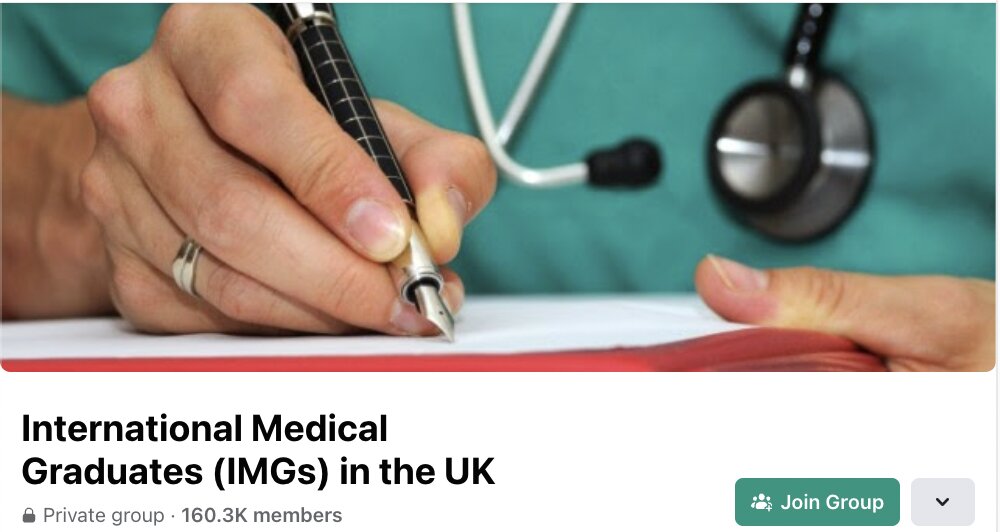
Above: A private Facebook group for IMGs with 160k members
For many IMGs, securing an NHS role is about far more than simply finding a job. It represents a rare opportunity for career progression, financial stability, structured postgraduate training, and the chance to build a long-term future in the UK healthcare system. In such a competitive environment, timing and visibility have become just as important as qualifications themselves.
The Global Push Factors Driving IMGs Toward the UK
To understand the volume of applications, you first need to understand the reality many IMGs come from. In many other developing countries, junior doctors face conditions far worse than what it will ever be in the UK. These push factors are powerful, and they shape the motivations of thousands of doctors every year.
- Low pay relative to workload. In many regions, junior doctors earn salaries that barely cover rent, let alone support a family. Some earn the equivalent of a UK minimum-wage job despite working 60–90 hour weeks. For example, in Pakistan, house officers earn around £150–£250 per month despite extremely long shifts.
- Chronic understaffing and unsafe working conditions. It's not unusual for a single doctor to cover an entire ward overnight, or to work without proper supervision, equipment, or rest. A well-documented example is India, where junior doctors in many government hospitals manage overwhelming patient loads with limited staffing and inconsistent senior support.
- Lack of structured training. Many countries have no protected teaching time, no clear progression pathway, and no guarantee of specialty training opportunities.
- Political instability and economic uncertainty. Doctors often leave not just for career reasons, but because their home country offers no predictable future. A prominent example is Myanmar, where political upheaval has severely disrupted healthcare services, medical training, and long-term career stability for junior doctors.
When you put these factors together, it becomes obvious why the UK looks like a lifeline, despite having its own challenges. For many IMGs, applying to NHS jobs is not simply a career move; it's a chance to escape a system that undervalues them.
Why the UK Stands Out: A Rare, Structured Pathway for IMGs
One of the biggest reasons the UK receives such a high volume of applications is that it is one of the very few developed countries in the world with a clear, transparent, and achievable pathway for IMGs to practise medicine. The PLAB route is widely respected for being fair, predictable, and accessible compared to alternatives.
- PLAB is achievable. Unlike some licensing exams that require years of preparation, PLAB is challenging but realistic. Over 8,000 people passed PLAB 2 in 2025.
- GMC registration is transparent. The requirements are clearly listed, regularly updated, and not dependent on personal connections or local politics.
- Training pathways are structured. Even if competitive, the UK offers defined routes into specialties, which is something many IMGs simply don't have at home.
- English-language healthcare environment. For many IMGs, English is already their primary medical language, making the transition smoother.
The only other major country with a similarly structured pathway is the US through the USMLE route. But the US system is far more competitive, far more expensive, and takes a much longer time. The UK, by contrast, feels attainable with most applicants obtaining GMC registration within a year. That alone drives massive application numbers.
The Pull Factors: What Makes the UK So Attractive?
Beyond escaping difficult conditions, IMGs are drawn to the UK because it offers something many have never experienced: a system that invests in their growth. Even with rota gaps, strikes, and funding issues, the NHS still provides a level of structure and professional respect that is rare globally.
- Better work–life balance. UK rotas are far from perfect, but they are still significantly safer and more humane than those in many countries.
- Protected training time. Even at the junior level, doctors receive teaching, supervision, and opportunities to develop skills.
- International recognition. UK clinical experience opens doors worldwide: the Middle East, Australia, New Zealand, and parts of Europe actively seek UK-trained doctors.
- Long-term settlement options. The UK offers a realistic path to residency and citizenship, which is a major factor for doctors with families.
- Professional respect. Many IMGs describe the UK as the first place where they felt treated as professionals rather than replaceable labour.
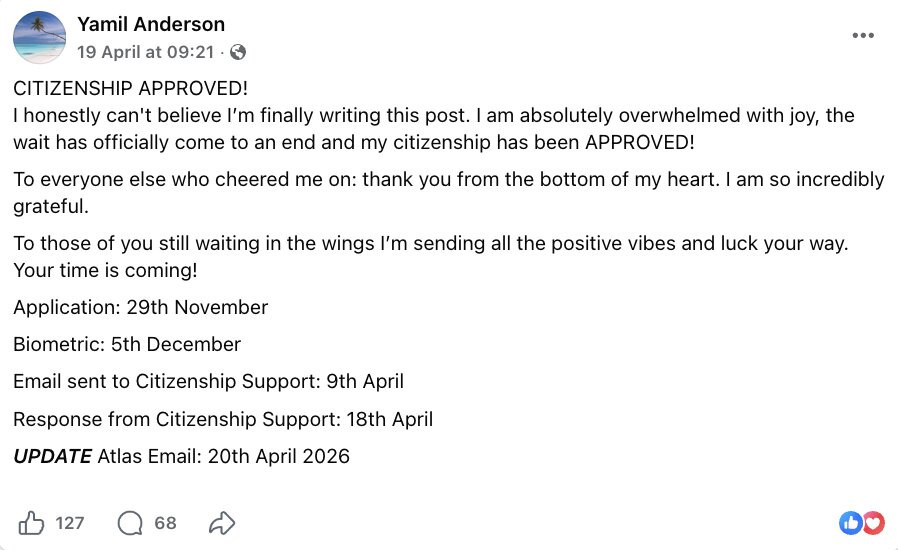
Above: A public Facebook post of UK citizenship approved
Why Competition Is So Intense at the Junior Level
You might wonder why competition is fiercest with FY2-3, SHO, JCF roles. The reason is simple: these are the entry points. Once IMGs gain UK experience, they can eventually move into training posts, specialty pathways, and more stable roles. But to get there, they need that first foothold.
This creates a bottleneck where thousands of IMGs, alongside other applicants such as UK graduates and returners, all compete for the same limited pool of jobs.
- Most IMGs enter at the junior level. It's the only realistic starting point for those without UK experience.
- Trusts prefer candidates with NHS experience. This creates a cycle where IMGs need experience to get experience.
- Some specialties are oversubscribed. Medicine, surgery, paediatrics, and emergency medicine often receive overwhelming interest.
- Application windows are short. Many posts fill within hours, the most popular ones within minutes, which is why timing matters so much.
If you want to improve your chances, you should apply broadly and apply as fast as possible.
The Bigger Picture: A Global Workforce Looking for Stability
The surge in applications isn't just about the NHS. It reflects a global trend: doctors everywhere are seeking systems that value training, safety, and long-term career development. The UK offers a level of structure and fairness that many countries simply cannot match.
And until more nations invest in their healthcare systems, the UK will continue to be a magnet for IMGs who want a better life for themselves and their families.
Conclusion
Junior doctor roles in the NHS attract hundreds of applications because the UK offers something rare in global healthcare: a clear pathway, a structured training environment, and a future that feels stable. For IMGs, that combination is powerful. It's why competition is fierce, why posts fill quickly, and why understanding the system matters more than ever.
If you're preparing to apply, staying informed and applying strategically can make a real difference. For those starting out, or are frustrated by the number of applications that they've sent without any response, start with how you can search effectively for NHS junior doctor roles.